Research Article | | Peer-Reviewed

Surgical Management Outcome of Benign Prostatic Hyperplasia in Yekatit 12 Hospital Medical College, Addis Ababa, Ethiopia

Received: 24 March 2024     Accepted: 8 April 2024     Published: 17 April 2024
Views:       Downloads:
Abstract

Background: Bladder outlet obstruction, common in older men, shows increased detrusor pressure and reduced urine flow during voiding. Diagnosis typically involves studying flow-rate and detrusor pressure values. Transvesical prostatectomy is a common treatment for significant prostatic enlargement, but real-world outcome data are scarce. Objective: To assess symptomatic improvement, changes in urinary incontinence and complications after transvesical prostatectomy for benign prostatic hyperplasia. Methods: Prospective cross-sectional study design was used and SPSS statistical software version 25 was used for data entry and analysis. Results: The mean age of patients with benign prostatic hyperplasia was 64.73±8.7 years. Preoperative international prostate symptoms score (IPSS) was 27.6±3.08. At 3 months, IPSS declined significantly to 8.13±2.86 (p<0.001). Preoperative incontinence completely resolved in 30% and partially improved in 70% of patients. New onset incontinence occurred in 13.5%. At 6 months, IPSS was 5.67±2.31. Of those with new postoperative incontinence, 42.9% completely resolved and 57.1% improved. For preoperative incontinence, 71.4% completely resolved and 28.6% partially improved. Erectile function failed to improve. Conclusion: The study showed trans-vesical prostatectomy results promising results in lower urinary tract symptoms improvement. Post-op incontinence got better for most, but erectile function didn't return to normal.

Published in Science Journal of Clinical Medicine (Volume 13, Issue 2)
DOI 10.11648/j.sjcm.20241302.11
Page(s) 21-28
Creative Commons

This is an Open Access article, distributed under the terms of the Creative Commons Attribution 4.0 International License (http://creativecommons.org/licenses/by/4.0/), which permits unrestricted use, distribution and reproduction in any medium or format, provided the original work is properly cited.

Copyright

Copyright © The Author(s), 2024. Published by Science Publishing Group

Keywords

Benign Prostatic Hyperplasia, Bladder Outlet Obstruction, Trans-Vesical Prostatectomy

1. Introduction
Benign prostatic hyperplasia (BPH) is prevalent in aging men, leading to bothersome lower urinary tract symptoms (LUTS) due to bladder outlet obstruction (BOO) . Typically, histologic BPH is present in 50% of men by age 50 . BOO is a significant global burden, particularly in developed countries, impacting quality of life and productivity . Diagnosis involves assessing synchronized flow-rate and detrusor pressure values. LUTS in BOO patients can be categorized into storage, voiding, and postmicturition symptoms. Increased awareness of LUTS, especially storage symptoms, is essential for discussing management options to improve quality of life .
Transurethral resection of the prostate (TURP) is the preferred surgical solution for BOO resulting from BPH, endorsed by both the American Urological Association and the European Association of Urology. TURP offers swift alleviation of LUTS with enduring outcomes . Nonetheless, in facilities with constrained specialized resources and surgical proficiency, TURP might not be feasible. Open prostatectomy approaches such as transvesical and retropubic methods demand more fundamental resources and skills, albeit associated with increased morbidity, prolonged hospital stays, and recovery periods compared to TURP .
Transvesical prostatectomy (TVP) is traditionally used for treating large volume BPH, typically over 75-80g, which can be difficult to address with endoscopic methods . Despite TVP being performed globally, even in resource-limited settings, recent data on real-world outcomes are surprisingly limited . Earlier studies from the 1990s showed satisfactory symptomatic improvement but substantial morbidity, with complication rates ranging from 18-30% . Consequently, current evidence on the safety and effectiveness of TVP in modern times is lacking. This study aims to fill this gap by providing evidence on outcomes after TVP for BPH-related BOO.
2. Methods and Materials

2.1. Study Area and Period

The study was conducted in Y12HMC which is an academic institution found in Addis Ababa, Ethiopia under Addis Ababa City Administration. The study conducted fromApril 2022 to December 2022 G. C.

2.2. Study Design

Prospective cross-sectional study was conducted in Yekatit 12 Hospital Medical College.

2.3. Source and Study Population

The source population comprised all patients who presented to the emergency department, surgical outpatient or inpatient with a diagnosis of bladder outlet obstruction secondary to BPH while patients who were admitted to the surgical ward and underwent surgery for bladder outlet obstruction at Y12HMC during the study period taken as study population.

2.4. Inclusion and Exclusion Criteria

All patients admitted to the surgical ward and operated for BPH within the study period that allowedevaluation at 3rd and 6 months of operation were included whereas patients not admitted in the time period and not evaluated at 3rd and 6th months post operation excluded from the study.

2.5. Study Variables

Independent variables: Age, occupation, presence or absence of complication from BPH, Type of surgery, preoperative LUTS severity score, preoperative presence or absence of incontinence, preoperative presence or absence of erectile dysfunction.
Dependent variables: Post-operative LUTS severity score, post-operative bother score, post-operative complaint of incontinence, post-operative complaint of erectile dysfunction.

2.6. Data Collection Technique and Quality Control

Data was collected using structured questionnaires adapted from the validated International Prostate Symptom Score (IPSS) and Symptom Bother Score instruments. The IPSS questionnaire consists of 7 questions assessing urinary symptoms including incomplete emptying, frequency, intermittency, urgency, weak stream, straining, and nocturia. Each question has a score from 0 (least severe) to 5 (most severe). The total score ranges from 0 to 35 and is classified as mild (0-7), moderate (8-19), or severe (20-35). The Symptom Bother Score comprises a single question that asks patients to rate how much their urinary condition bothers them on a scale of 0 (delighted) to 6 (terrible). Additional items were added to collect data on relevant demographic and clinical characteristics such as age, occupation, type of surgery, preoperative and postoperative urinary incontinence, and erectile dysfunction.
Data collectors got training on the data collection tool and how to conduct data collection. Preoperatively, the questionnaires were administered through interviews at the time of admission for bladder outlet obstruction surgery. Postoperatively, the respondents were contacted for telephone interviews at 3 and 6 months after discharge. The principal investigator reviewed each filled questionnaire for completeness, accuracy and clarity before data entry.

2.7. Data Processing and Analysis

The data was entered into Epi Info entry software version 7.2 and exported to SPSS version 27 for analysis. Descriptive statistics such as frequencies, percentages, means and standard deviations were calculated for demographic and clinical characteristics. Categorical variables were summarized as numbers and percentages. Continuous variables were summarized using means and standard deviations. Tables and charts were used to present the results. Paired sample t-test was conducted to compare preoperative and postoperative IPSS scores and bother scores. A p-value of <0.05 was considered statistically significant.
3. Result

3.1. Demographic Characteristics of Participants

The study involved 52 male patients who underwent transvesical prostatectomy (TVP) for bladder outlet obstruction (BOO) due to benign prostatic hyperplasia (BPH). The mean age was 64.73 ± 8.7 years, ranging from 48 to 87 years, reflecting the elderly population affected by BPH. Among them, 22 (42.3%) were retired, and 30 (57.7%) were still employed. Among the working patients, 14 (26.9%) were government employees, 9 (17.3%) worked in the private sector, and 7 (13.5%) were farmers.

3.2. Causes of Bladder Outlet Obstruction and Type of Surgery

All 52 (100%) patients in the study had bladder outlet obstruction due to benign prostatic hyperplasia (BPH). Transvesical prostatectomy (TVP) was the sole surgical procedure performed; no other surgeries such as transurethral resection of the prostate (TURP) were conducted for this cohort.

3.3. Preoperative Symptoms and Bother Scores

Symptom Scores
The severity of lower urinary tract symptoms (LUTS) before surgery was assessed using the International Prostate Symptom Score (IPSS), a validated questionnaire consisting of 7 questions. Preoperative IPSS for the study cohort was 27.6 ± 3.08, indicating severe LUTS with scores ranging from 20 to 32. All 52 (100%) patients had severe symptoms (20-35) before surgery, with none having moderate (8-19) or mild (0-7) LUTS. This highlights the advanced and debilitating nature of urinary symptoms by the time patients undergo surgery.
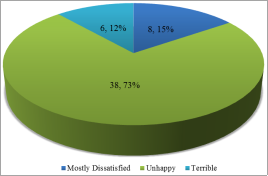
Figure 1. Preoperative bother score assessing quality of life.
Preoperatively, the negative impact of urinary symptoms on quality of life was assessed using the Symptom Bother Score, ranging from 0 to 6. The mean preoperative bother score was 4.96 ± 0.52, indicating significant unhappiness due to urinary symptoms. Most patients (73.1%) reported a bother score of 5, signifying unhappiness, while 6 (12%) felt terrible (score of 6), and 8 (15%) were mostly dissatisfied (score of 4) (Figure 1).
Incontinence and erectile dysfunction
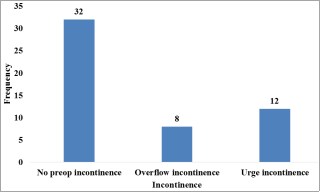
Preoperative urinary incontinence was assessed using a structured questionnaire. Patients were asked if they had complaints of involuntary loss of urine before undergoing surgery for benign prostatic hyperplasia. The analysis showed that 20 (38.5%) patients had some form of urinary incontinence prior to surgery. Specifically, 12 (23.1%) patients described urge urinary incontinence, meaning loss of urine associated with a sudden compelling desire to void. Additionally, 8 (15.4%) patients had overflow incontinence, indicating leakage of urine when the bladder chronically overfills due to obstructed outflow. No patients in this cohort complained of stress incontinence, which is urine loss during exertional activities like coughing, sneezing or exercise (Figure 2).
Regarding erectile dysfunction, none of the patients reported complaints of difficulty in achieving or maintaining erections before surgery.
Figure 2. Type of Incontinence before surgery.

3.4. Postoperative Outcomes at 3 Months

Symptom Scores****
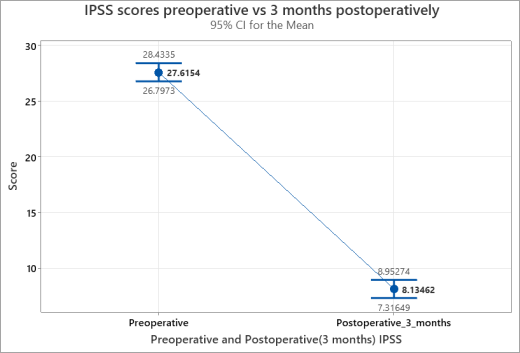
The mean IPSS decreased markedly from 27.6 ± 3.08 preoperatively to 8.13 ± 2.86 at 3 months post-surgery. This difference was statistically significant based on paired t-test (t(51) = 41.408, p < 0.001, 95% CI 18.536 to 20.425) (Figure 3). The mean postoperative IPSS of 8.13 indicates moderate LUTS severity. Specifically, the 3-month post-surgery IPSS score ranged from 3 to 15 in the study cohort. Of the 52 patients, 33 (63.5%) had moderate LUTS with scores of 8-19. Mild LUTS (IPSS 0-7) was seen in 19 (36.5%) patients. Importantly, none of the patients had severe LUTS (IPSS 20-35) at 3 months after surgery. Before surgery, 100% had severe symptoms (Figure 3).
Figure 3. IPSS scores preoperative vs 3 months postoperatively.
At 3 months postoperatively, the mean bother score reduced significantly to 1.65 ± 0.84 (p<0.001). Specifically, at 3 months after surgery, 2 (3.8%) patients reported being delighted (score of 0), 22 (42.3%) were pleased (score of 1), 22 (42.3%) were mostly satisfied (score of 2), 4 (7.7%) had mixed feelings (score of 3), and 2 (3.8%) were mostly dissatisfied (score of 4). None of the patients had bother scores of 5 (unhappy) or 6 (terrible) at 3 months postoperatively, compared to 38 (73.1%) and 12 (23.1%) respectively before surgery (Table 1).
Table 1. Bother score at 3 months postoperative.

Bother Score

Frequency

Percent

Delighted

2

3.80%

Pleased

22

42.30%

Mostly satisfied

22

42.30%

Mixed (About Equally Satisfied and Dissatisfied)

4

7.70%

Mostly Dissatisfied

2

3.80%

Incontinence
Out of 52 patients, 7 (13.5%) reported new onset urinary incontinence that they did not have prior to surgery. This included 3 (5.8%) with new urge incontinence and 4 (7.7%) with new stress incontinence. Among patients who had preoperative urinary incontinence (n=20), complete resolution occurred in 6 (30%) at 3 months after transvesical prostatectomy. The remaining 14 (70%) patients showed partial improvement in their baseline incontinence, but not complete resolution. None of the patients with preoperative incontinence reported worsening or no change in symptoms compared to their baseline status before surgery (Table 2).
Table 2. Urinary incontinence at 3 months.

Incontinence status

Frequency

Percent

New onset postoperative incontinence

7

13.5%

Preoperative incontinence (n=20)

Completely resolved

6

30%

Partially improved

14

70%

Erectile Dysfunction
Out of 52 patients, 3 (5.8%) reported new onset erectile dysfunction at 3 months after surgery, which they did not have prior to the procedure. None of the patients had preoperative complaints of erectile dysfunction.

3.5. Postoperative Outcomes at 6 Months

Symptom Scores
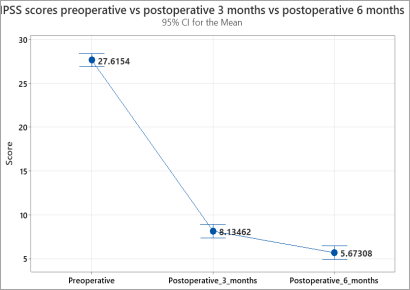
The mean IPSS decreased from 27.6 ± 3.08 preoperatively to 5.67 ± 2.31 at 6 months post-surgery. This difference was statistically significant based on paired t-test (t(51) = 48.770, p < 0.001, 95% CI 21.039 to 22.846). Clinically, the mean 6-month IPSS of 5.67 indicates mild LUTS severity. This reveals sustained relief of urinary symptoms in the medium-term follow-up after prostate surgery. Specifically, 38 (73.1%) patients had mildly symptomatic LUTS with IPSS of 0-7 at 6 months postoperatively. The remaining 14 (26.9%) had moderate LUTS with scores of 8-19. None of the patients had severe LUTS (IPSS 20-35) at 6 months after surgery, compared to 100% preoperatively. Additionally, there was significant further reduction in IPSS from 3 months to 6 months postoperatively (p<0.001). This denotes progressive improvement in urinary symptoms over time (Figure 4).
Figure 4. IPSS scores preoperative vs 6 months.
At 6 months postoperatively, the mean bother score had reduced significantly to 0.88 ± 0.83 form baseline before surgery mean bother score of 4.96 ± 0.52 (p<0.001). This reveals sustained improvement in quality of life related to urinary symptoms. Specifically, at 6 months after surgery, 19 (36.5%) patients reported being delighted (score of 0), 22 (42.3%) were pleased (score of 1), 9 (17.3%) were mostly satisfied (score of 2), and only 2 (3.8%) had mixed feelings (score of 3). None of the patients had bother scores of 4 or above, denoting significant unhappiness due to their urinary condition. In comparison, before surgery 38 (73.1%) and 12 (23.1%) patients had bother scores of 5 and 6 respectively, indicating severe distress from urinary symptoms (Table 3).
Table 3. Bother score at 6 months postoperative.

Bother Score

Frequency

Percent

Delighted

19

36.5

Pleased

22

42.3

Mostly satisfied

9

17.3

Mixed (About Equally Satisfied and Dissatisfied)

2

3.8

Incontinence
Out of 7 patients who developed new onset urinary incontinence postoperatively, 3 (42.9%) had complete resolution while 4 (57.1%) showed improvement by 6 months.
Among 14 patients who had preoperative incontinence, complete cure was seen in 10 (71.4%) at 6 months after surgery. The remaining 4 (28.6%) experienced partial improvement in their baseline symptoms but not complete resolution. None of the patients with preoperative incontinence reported worsening of leakage at 6 months compared to their status before surgery.
Erectile Dysfunction
All 3 patients reported improvement in their erectile function compared to 3 months postoperatively. However, none had complete resolution back to their baseline status before surgery.
Therefore, at 6 months after TVP, the majority of patients had sustained improvements in IPSS, bother score, and urinary incontinence. erectile function compared to baseline didn’t show improvement.

3.6. Postoperative Outcomes Based on Age and Occupation

Outcomes based on Age
Patients were divided into two subgroups based on age - ≤ 65 years and > 65 years.
Age ≤ 65 years (n=31)
The mean age in this subgroup was 59.19 ± 5.01 years. The preoperative IPSS was 27.16 ± 2.78 which declined to 8.65 ± 3.05 at 3 months and 5.65 ± 2.46 at 6 months after TVP (p<0.001).
Of 12 patients who had urinary incontinence before surgery, 10 of them had recovered completely at 6 months and the remaining 2 patients had an improved symptom.
Age > 65 years (n=21)
The mean age in this subgroup was 72.90 ± 6.26 years. The preoperative IPSS was 27.9 ± 3.5 which reduced to 5.3 ± 2.9 at 6 months post-surgery (p<0.001).
In patients aged > 65 years with preoperative incontinence (n=8), complete resolution occurred in 5 (62.5%) at 6 months. One patient with new postoperative incontinence, had improved urinary incontinence by not completely recovery at 6 months.
Though patients aged > 65 years appeared to have slightly better IPSS recovery, the difference was not statistically significant (p=0.914). The rates of incontinence resolution were also comparable between the subgroups.
Outcomes Based on Occupation
The study participants were divided into two subgroups based on their occupation - retired (n=22) and employed (n=30).
Retired patients (n=22)
The mean age was 71.09 ± 7.24 years. The preoperative IPSS was 27.68 ± 3.47, which declined to 8.23 ± 2.69 at 3 months and 6.23 ± 1.97 at 6 months postoperatively (p<0.001). Of 9 patients with preoperative incontinence, 7 (77.8%) recovered completely by 6 months.
Employed patients (n=30)
The mean age was 60.07 ± 6.56 years. The preoperative IPSS was 27.57 ± 2.83, which reduced to 8.07 ± 3.03 at 3 months and 5.27 ± 2.48 at 6 months after surgery (p<0.001). Of 11 patients with preoperative incontinence, 9 (81.8%) had complete resolution at 6 months.
There were no statistically significant differences in IPSS improvement or incontinence recovery based on occupation status. However, retired patients tended to have slightly higher postoperative IPSS. Older age in retired individuals may account for their higher symptom scores.
4. Discussion
This prospective study provides valuable insights into real-world outcomes after transvesical prostatectomy for bladder outlet obstruction secondary to benign prostatic hyperplasia. All 52 patients were males with a mean age of 64.73 years. This is expected as BPH typically affects older men due to age-related proliferative changes in the prostate .
The preoperative IPSS score was 27.6 indicating severe LUTS. This highlights that significant delays occur in the diagnosis and management of BPH in our setting, allowing progression to advanced disease. The mean preoperative bother score of 4.96 also denotes substantially reduced quality of life from urinary symptoms prior to surgery.
A key finding was that 38.5% of patients had preoperative urinary incontinence, mostly urge (23.1%) and overflow (15.4%) types. This rate is higher compared to other studies that have reported incontinence in 18.5-26% of men with LUTS. The high prevalence of incontinence, along with advanced LUTS, underscores the need for greater community awareness regarding BPH to enable early diagnosis and treatment.
At 3 months after TVP, the IPSS showed marked reduction to 8.13. The postoperative IPSS has ranged from 6.1 to 8.7 in previous studies . The bother score also improved significantly to 1.65. However, new onset urinary incontinence developed in 13.5% patients, which is comparable to the 8-15% rates described for open prostatectomy .
Notably, 30% of patients had complete resolution while 70% showed partial improvement of their preoperative incontinence at 3 months. This indicates that relieving bladder outlet obstruction can improve sphincter control and detrusor function in many cases. Similar incontinence improvements after prostate surgery have been reported earlier .
The benefits were sustained at 6 months with IPSS of 5.67 and bother score of 0.88. Of those with new postoperative incontinence at 3 months, 42.9% completely resolved and 57.1% improved by 6 months. For preoperative incontinence, 71.4% had completed while 28.6% had partial resolution at 6 months. Therefore, a majority of patients experienced sustained symptomatic relief and urinary control post TVP. However, erectile function failed to improve at 6 months. Chronic ischemia and neuronal inflammation from longstanding BOO may underlie lack of erectile recovery .
In subgroup analysis, age above or below 65 years did not significantly influence LUTS recovery or incontinence improvement. This contrasts with some studies reporting worse outcomes and higher retreatment rates in older patients . Our smaller sample size may have precluded detecting age-related differences. Outcomes were also comparable between retired versus employed individuals, although retired patients tended to have slightly higher postoperative IPSS possibly related to their older age.
The study findings demonstrate that transvesical prostatectomy is an efficacious intervention for LUTS relief in BPH patients. However, delays in diagnosis are common, allowing progression to adverse outcomes like incontinence and renal dysfunction. Greater community awareness and improved access to urological care are essential to enable early detection and optimal management of BOO.
5. Conclusion
This study shows that transvesical prostatectomy (TVP) significantly improves lower urinary tract symptoms (LUTS), with IPSS decreasing from 27.6 preoperatively to 8.13 at 3 months and 5.67 at 6 months. Quality of life improved, with 30% experiencing complete resolution and 70% partial improvement in urinary incontinence. Postoperative incontinence improved for most patients. However, erectile function did not return to baseline. TVP appears effective for relieving severe LUTS in BPH patients, but erectile dysfunction remains a concern.
Abbreviations
BOO: Bladder Outlet Obstruction
DM: Diabetes Mellitus
BPE: Benign Prostatic Enlargement
HTN: Hypertension
BPH: Benign Prostatic Hyperplasia
BMI: Body Mass Index
LUTS: Lower Urinary Tract Symptoms
BOOI: Bladder Outlet Obstruction Index
BCI: Bladder Contractility Index
STVP: Supra Pubic Transvesical Prostatectomy
UK: United Kingdom
TURP: Trans-Urethral Resection of Prostate
VCUG: Voidingcysto-Urethrography
TVP: Transvesical Prostatectomy
UTI: Urinary Tract Infection
ICU: Intensive Care Unit
BMG: Buccal Mucosa Graft
IPSS: International Prostatesymptomscore
Ethical Approval and Consent to Participants
Ethical clearance was obtained from the Institutional Review Board of Y12HMC (Reference number: Y12HMC 157/22, dated May 18/2022). Permission and written consent were taken from the college management. The information gained from the patients upon data collection was kept confidential by using codes for each card throughout the study. The procedures followed were by the ethical standards of the Helsinki Declaration.
Acknowledgments
The authors acknowledge all individuals involved in the comprehensive management of the patients as well as administration of Yekatit 12 Hospital Medical College for granting permission to access and utilize the patients’ medical records in the preparation of this article.
DataAvailability Statement
All data supporting the case report is available with the crosspondance.
Conflicts of Interest
The authors declare no conflicts of interest.
References
[1] Parsons, J. K., Benign prostatic hyperplasia and male lower urinary tract symptoms: epidemiology and risk factors. Current bladder dysfunction reports, 2010. 5: p. 212-218.
[2] Berry, S. J., et al., The development of human benign prostatic hyperplasia with age. The Journal of urology, 1984. 132(3): p. 474-479.
[3] McVary, K. T., et al., Update on AUA guideline on the management of benign prostatic hyperplasia. The Journal of urology, 2011. 185(5): p. 1793-1803.
[4] Lose, G., et al., Standardisation of urethral pressure measurement: report from the Standardisation Sub-Committee of the International Continence Society. Neurourology and Urodynamics: Official Journal of the International Continence Society, 2002. 21(3): p. 258-260.
[5] Martin, S. A., et al., Prevalence and factors associated with uncomplicated storage and voiding lower urinary tract symptoms in community-dwelling Australian men. World journal of urology, 2011. 29: p. 179-184.
[6] Agarwal, A., et al., What is the most bothersome lower urinary tract symptom? Individual-and population-level perspectives for both men and women. European urology, 2014. 65(6): p. 1211-1217.
[7] Ahyai, S. A., et al., Meta-analysis of functional outcomes and complications following transurethral procedures for lower urinary tract symptoms resulting from benign prostatic enlargement. European urology, 2010. 58(3): p. 384-397.
[8] Cornu, J.-N., et al., A systematic review and meta-analysis of functional outcomes and complications following transurethral procedures for lower urinary tract symptoms resulting from benign prostatic obstruction: an update. European urology, 2015. 67(6): p. 1066-1096.
[9] Lucca, I., et al., Outcomes of minimally invasive simple prostatectomy for benign prostatic hyperplasia: a systematic review and meta-analysis. World journal of urology, 2015. 33: p. 563-570.
[10] Burke, N., et al., Systematic review and meta-analysis of transurethral resection of the prostate versus minimally invasive procedures for the treatment of benign prostatic obstruction. Urology, 2010. 75(5): p. 1015-1022.
[11] Rassweiler, J., et al., Complications of transurethral resection of the prostate (TURP)—incidence, management, and prevention. European urology, 2006. 50(5): p. 969-980.
[12] Mamoulakis, C., D. T. Ubbink, and J. J. de La Rosette, Bipolar versus monopolar transurethral resection of the prostate: a systematic review and meta-analysis of randomized controlled trials. European urology, 2009. 56(5): p. 798-809.
[13] Mebust, W., et al., Transurethral prostatectomy: immediate and postoperative complications. A cooperative study of 13 participating institutions evaluating 3,885 patients. The Journal of urology, 1989. 141(2): p. 243-247.
[14] Fasciolo, A. and C. Baldini, Transvesical prostatic adenomectomy: general or local anesthesia. Urologia Journal, 2008. 75(4): p. 221-227.
[15] Irwin, D. E., et al., Population-based survey of urinary incontinence, overactive bladder, and other lower urinary tract symptoms in five countries: results of the EPIC study. European urology, 2006. 50(6): p. 1306-1315.
[16] Coyne, K. S., et al., The prevalence of lower urinary tract symptoms (LUTS) in the USA, the UK and Sweden: results from the Epidemiology of LUTS (EpiLUTS) study. BJU international, 2009. 104(3): p. 352-360.
[17] Tkocz, M. and A. Prajsner, Comparison of long-term results of transurethral incision of the prostate with transurethral resection of the prostate, in patients with benign prostatic hypertrophy. Neurourology and Urodynamics: Official Journal of the International Continence Society, 2002. 21(2): p. 112-116.
[18] Reich, O., C. Gratzke, and C. G. Stief, Techniques and long-term results of surgical procedures for BPH. European urology, 2006. 49(6): p. 970-978.
[19] Thomas, A. W., et al., The natural history of lower urinary tract dysfunction in men: minimum 10-year urodynamic followup of transurethral resection of prostate for bladder outlet obstruction. The Journal of urology, 2005. 174(5): p. 1887-1891.
[20] Parry, M. G., et al., Urinary incontinence and use of incontinence surgery after radical prostatectomy: a national study using patient‐reported outcomes. BJU international, 2022. 130(1): p. 84-91.
[21] Elshal, A. M., H. M. Elmansy, and M. M. Elhilali, Transurethral laser surgery for benign prostate hyperplasia in octogenarians: safety and outcomes. Urology, 2013. 81(3): p. 634-639.
[22] Lokeshwar, S. D., et al., Epidemiology and treatment modalities for the management of benign prostatic hyperplasia. Translational andrology and urology, 2019. 8(5): p. 529.
Cite This Article
  • APA Style

    Gebremichael, N., Abdissa, M., Amtataw, W., Endazenaw, G. (2024). Surgical Management Outcome of Benign Prostatic Hyperplasia in Yekatit 12 Hospital Medical College, Addis Ababa, Ethiopia. Science Journal of Clinical Medicine, 13(2), 21-28. https://doi.org/10.11648/j.sjcm.20241302.11

    Copy | Download

    ACS Style

    Gebremichael, N.; Abdissa, M.; Amtataw, W.; Endazenaw, G. Surgical Management Outcome of Benign Prostatic Hyperplasia in Yekatit 12 Hospital Medical College, Addis Ababa, Ethiopia. Sci. J. Clin. Med. 2024, 13(2), 21-28. doi: 10.11648/j.sjcm.20241302.11

    Copy | Download

    AMA Style

    Gebremichael N, Abdissa M, Amtataw W, Endazenaw G. Surgical Management Outcome of Benign Prostatic Hyperplasia in Yekatit 12 Hospital Medical College, Addis Ababa, Ethiopia. Sci J Clin Med. 2024;13(2):21-28. doi: 10.11648/j.sjcm.20241302.11

    Copy | Download

  • @article{10.11648/j.sjcm.20241302.11,
      author = {Niyat Gebremichael and Michael Abdissa and Wondwossen Amtataw and Getabalew Endazenaw},
      title = {Surgical Management Outcome of Benign Prostatic Hyperplasia in Yekatit 12 Hospital Medical College, Addis Ababa, Ethiopia
    },
      journal = {Science Journal of Clinical Medicine},
      volume = {13},
      number = {2},
      pages = {21-28},
      doi = {10.11648/j.sjcm.20241302.11},
      url = {https://doi.org/10.11648/j.sjcm.20241302.11},
      eprint = {https://article.sciencepublishinggroup.com/pdf/10.11648.j.sjcm.20241302.11},
      abstract = {Background: Bladder outlet obstruction, common in older men, shows increased detrusor pressure and reduced urine flow during voiding. Diagnosis typically involves studying flow-rate and detrusor pressure values. Transvesical prostatectomy is a common treatment for significant prostatic enlargement, but real-world outcome data are scarce. Objective: To assess symptomatic improvement, changes in urinary incontinence and complications after transvesical prostatectomy for benign prostatic hyperplasia. Methods: Prospective cross-sectional study design was used and SPSS statistical software version 25 was used for data entry and analysis. Results: The mean age of patients with benign prostatic hyperplasia was 64.73±8.7 years. Preoperative international prostate symptoms score (IPSS) was 27.6±3.08. At 3 months, IPSS declined significantly to 8.13±2.86 (pConclusion: The study showed trans-vesical prostatectomy results promising results in lower urinary tract symptoms improvement. Post-op incontinence got better for most, but erectile function didn't return to normal. 
    },
     year = {2024}
    }
    

    Copy | Download

  • TY  - JOUR
    T1  - Surgical Management Outcome of Benign Prostatic Hyperplasia in Yekatit 12 Hospital Medical College, Addis Ababa, Ethiopia
    
    AU  - Niyat Gebremichael
    AU  - Michael Abdissa
    AU  - Wondwossen Amtataw
    AU  - Getabalew Endazenaw
    Y1  - 2024/04/17
    PY  - 2024
    N1  - https://doi.org/10.11648/j.sjcm.20241302.11
    DO  - 10.11648/j.sjcm.20241302.11
    T2  - Science Journal of Clinical Medicine
    JF  - Science Journal of Clinical Medicine
    JO  - Science Journal of Clinical Medicine
    SP  - 21
    EP  - 28
    PB  - Science Publishing Group
    SN  - 2327-2732
    UR  - https://doi.org/10.11648/j.sjcm.20241302.11
    AB  - Background: Bladder outlet obstruction, common in older men, shows increased detrusor pressure and reduced urine flow during voiding. Diagnosis typically involves studying flow-rate and detrusor pressure values. Transvesical prostatectomy is a common treatment for significant prostatic enlargement, but real-world outcome data are scarce. Objective: To assess symptomatic improvement, changes in urinary incontinence and complications after transvesical prostatectomy for benign prostatic hyperplasia. Methods: Prospective cross-sectional study design was used and SPSS statistical software version 25 was used for data entry and analysis. Results: The mean age of patients with benign prostatic hyperplasia was 64.73±8.7 years. Preoperative international prostate symptoms score (IPSS) was 27.6±3.08. At 3 months, IPSS declined significantly to 8.13±2.86 (pConclusion: The study showed trans-vesical prostatectomy results promising results in lower urinary tract symptoms improvement. Post-op incontinence got better for most, but erectile function didn't return to normal. 
    
    VL  - 13
    IS  - 2
    ER  - 

    Copy | Download

Author Information
  • Abstract
  • Keywords
  • Document Sections

    1. 1. Introduction
    2. 2. Methods and Materials
    3. 3. Result
    4. 4. Discussion
    5. 5. Conclusion
    Show Full Outline
  • Abbreviations
  • Ethical Approval and Consent to Participants
  • Acknowledgments
  • DataAvailability Statement
  • Conflicts of Interest
  • References
  • Cite This Article
  • Author Information